New specialists challenge Greenland’s most demanding terrain
For the first time, the Danish Defence can operate across all of Greenland, including high-alpine terrain. A new capacity, the Jaeger Corps’ Arctic Specialists, has just proven its value in one of the most inaccessible areas in the Arctic.
January 20, 2026 - 09:00
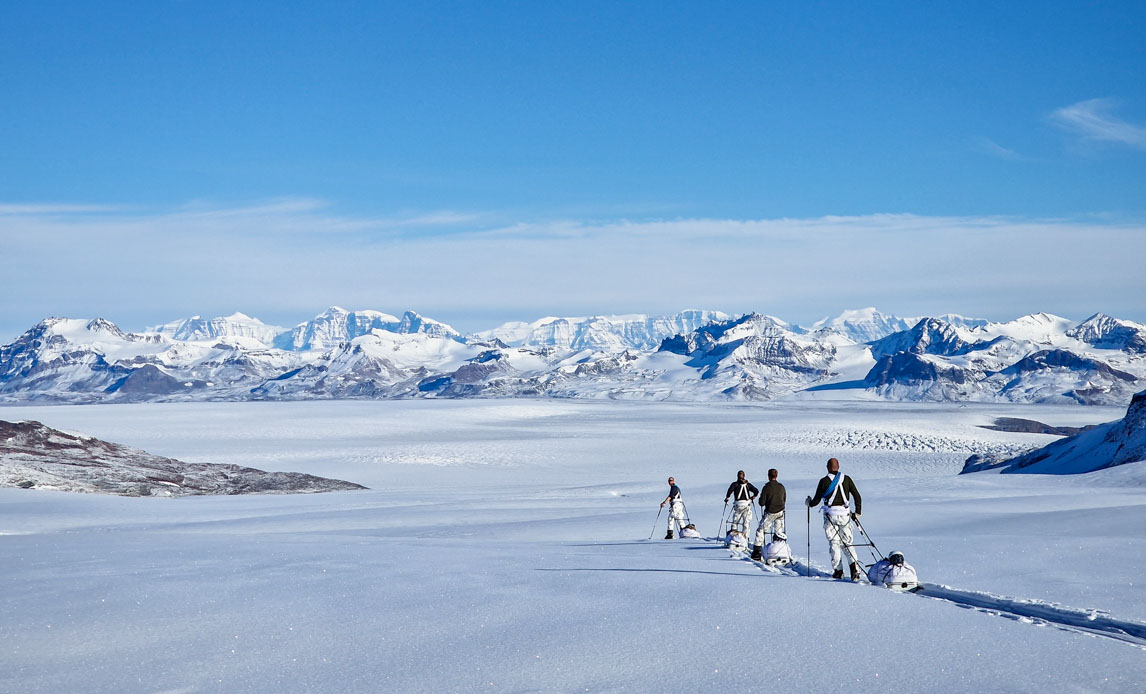
The Jaeger Corps’ Arctic specialists have patrolled the Blosseville Coast—an area previously never patrolled by the Danish Armed Forces.
By Danish Defence
A new capability of the Danish Defence, the Jaeger Corps’ Arctic Specialists, still under development, has for the first time tested itself under Greenland’s most demanding conditions along the Blosseville Coast. The capability consists of Arctic specialists—former patrol leaders from the Sirius Patrol—who are trained to operate in some of the world’s harshest environments.
The purpose of the new capability includes increasing presence in the Arctic and enabling operations across Greenland, including high-alpine terrain.
The capability was put to the test during an operation on the Blosseville Coast in October. The area is unique in that it has no settlements, no local population, and no police presence. It lies beyond the reach of conventional patrols and is characterized by a rugged coastline and steep mountain ranges.
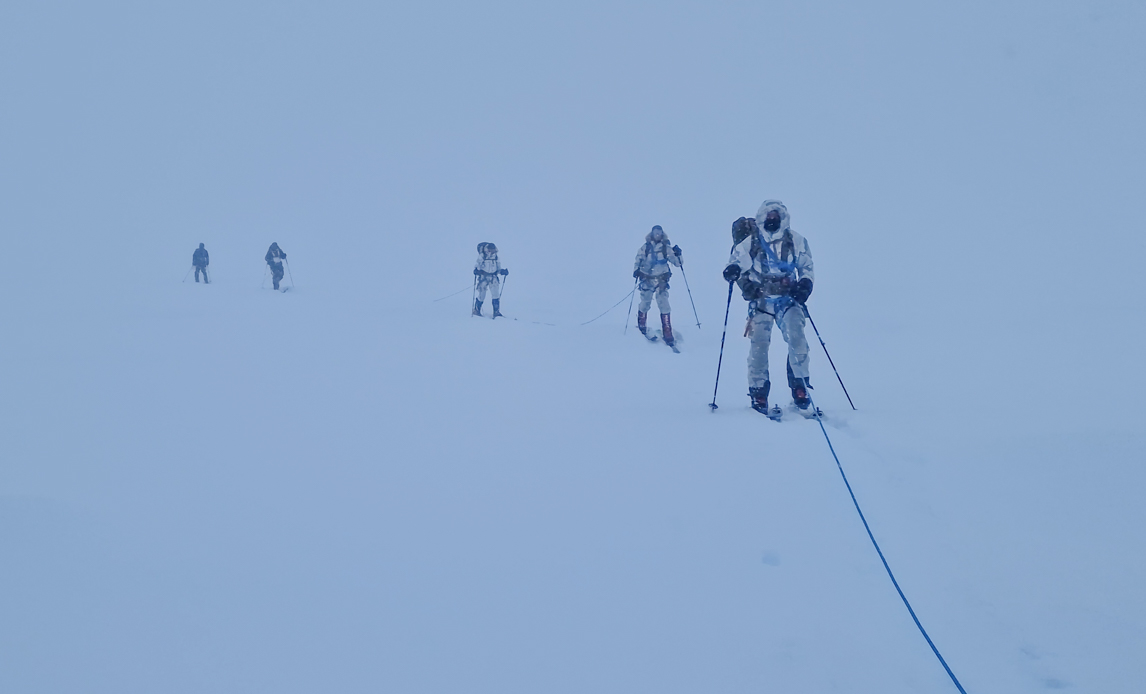
The patrol took place in October, when weather conditions can be unpredictable, with severe storms, heavy rain, and sleet. Photo: Danish Defence
“Historically, this area has not been patrolled by the Danish Armed Forces. The purpose of the operation was therefore to patrol and assess the area—and to deploy a patrol specifically in October, when conditions are particularly challenging,” says Major General Søren Andersen, Commander of Arctic Command.
The area is more accessible during summer and winter. In summer, the waters are open; in winter, they are reliably frozen.
“In a season like October, you can encounter rain and sleet, the ice has not yet formed, and storms are significantly stronger. That makes it especially relevant for us to demonstrate both the will and the ability to operate in extreme terrain,” Søren Andersen explains.
Unique expertise in Arctic environments
The Jaeger Corps’ Arctic specialists are recruited from the Sirius Patrol, a 26 month program with a very limited intake of only the most suitable candidates. Upon completing service with the Sirius Patrol, personnel can apply to continue as Arctic specialists, building on the competencies developed during their time in Sirius. Like the Sirius Patrol, the Arctic specialists are organizationally assigned to the Jaeger Corps’ Sirius Squadron.
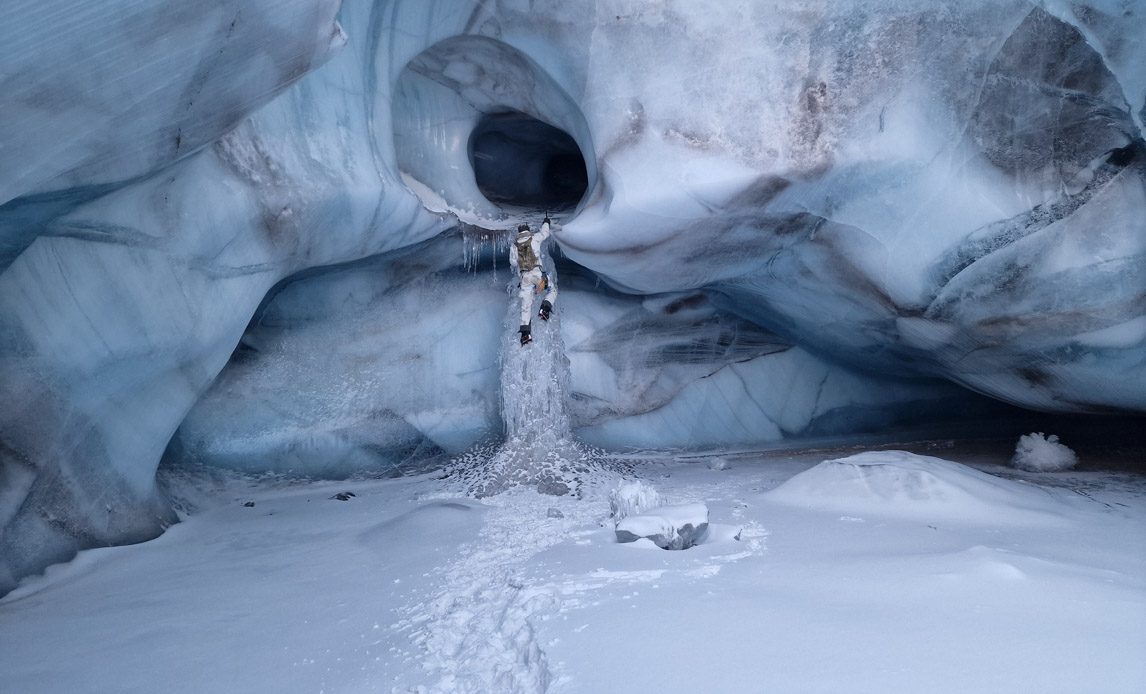
Arctic specialists of the Jaeger Corps receive training in alpine climbing, enabling deployment in high-alpine terrain and glacier environments. Photo: Danish Defence
“The Arctic specialists can move, patrol, and solve tasks where the cold, ice, storms, and extreme remoteness turn even simple tasks into complex challenges,” says Christopher Sohl, Acting Commander of Sirius Squadron, continuing:
“The unique value of this capability is closely tied to the soldiers’ experience and training. They are accustomed to pulling a sled for ten hours a day, sleeping in a small, wind-battered tent, melting all their own water, and living on freeze dried food for weeks at a time. And not least, they possess a unique understanding of Arctic environments.”
The Arctic specialists have received specialized training in mountain and high alpine operations, including avalanches and landslides, ice and rock climbing, rope and anchor systems, avalanche risk assessment, and advanced terrain analysis.
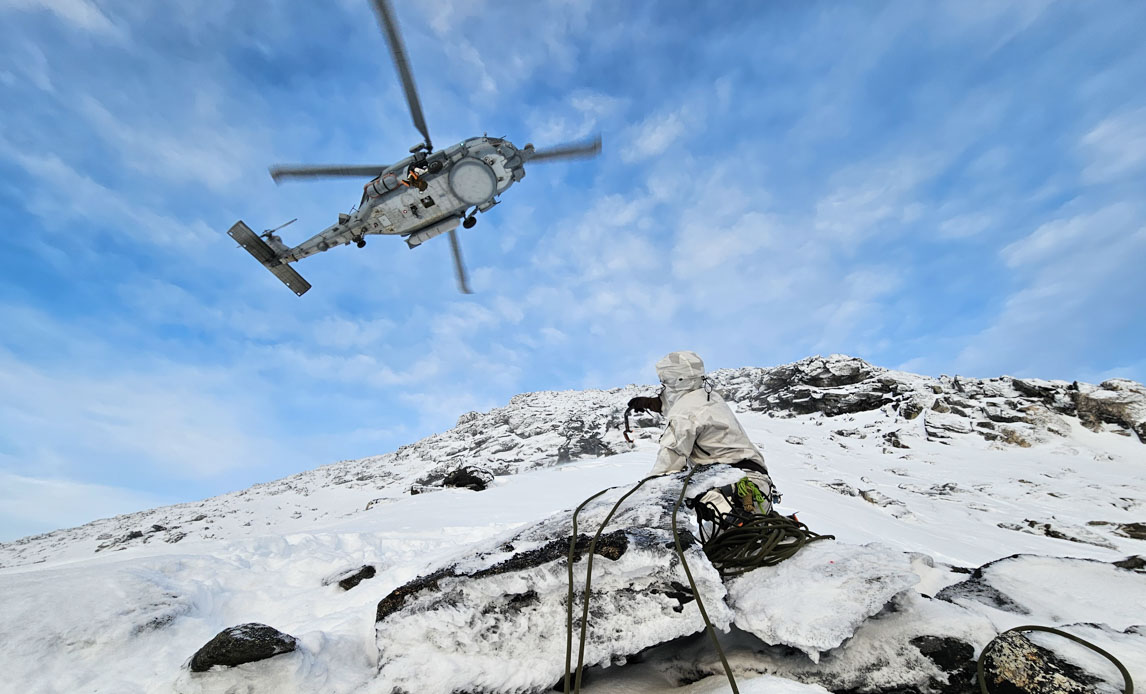
The Arctic specialists have been deployed on several occasions, including a recovery mission conducted by Arctic Command at the request of the Greenland Police. The task involved recovering a deceased pilot, electronic equipment, and other effects from Sermitsiaq Island following an aircraft crash on 25 October 2025. Photo: Danish Defence
According to Christopher Sohl, one of the most important outcomes of the Blosseville Coast operation is a detailed terrain map.
“All areas the team traversed—on foot, by snowmobile, and by air—have been plotted on a map. These markings are supplemented with assessments of where it is possible to land, operate snowmobiles, conduct helicopter insertions, or move if specialized mountain training is required. If the Danish Armed Forces need to conduct an operation in the area in the future, concrete terrain knowledge now exists,” says Christopher Sohl.
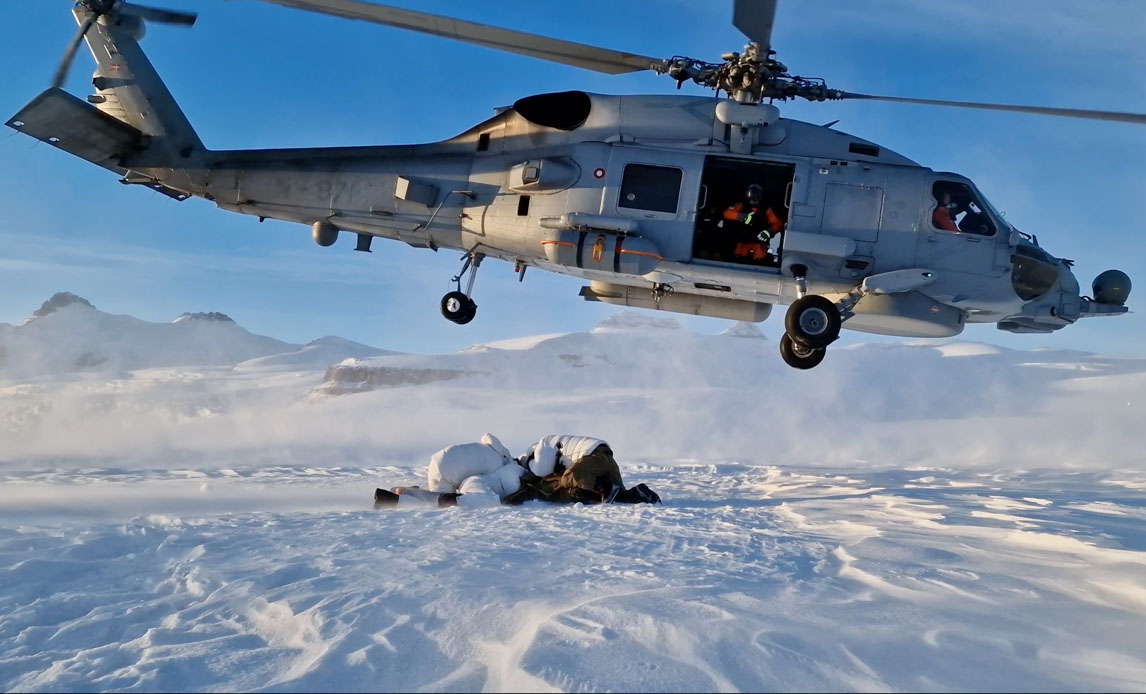
During the operation, the capability conducted a series of reconnaissance flights over known areas, old fuel depots, and former camps established in connection with mineral exploration. Photo: Danish Defence
The Arctic specialists were established as a result of Sub-Agreement 1 on the Arctic and the North Atlantic under the Defence Agreement 2024–2033, which included a decision to strengthen the Sirius capability.
The initial operational capacity reflects the Special Operations Command’s rapid response to the evolving security environment and the need to build combat power.
FACT BOX: From Coast to Greenland’s Highest Point
The operation began with an airlift to Iceland, followed by onward transport aboard the inspection vessel Thetis to the Blosseville Coast. En route, the capability conducted several reconnaissance flights over known areas, former fuel depots, and legacy camps established during mineral exploration activities.
The Arctic specialists were then inserted along the coast to begin their task: patrolling and assessing how and where movement in the area is possible. This included identifying a route from the coastline to Greenland’s highest point, Gunnbjørn Fjeld, following the “sea to summit” principle—from sea level to the summit.
The Arctic specialists accomplished this on foot, on skis, and while hauling heavy sleds through terrain where any misjudgment can have serious consequences.