NATO countries practise critical rescue operations in Greenland
As part of the Arctic Shield exercise, Denmark, in collaboration with Finland and several other NATO countries, has, amongst other things, practised rescue operations in Greenland’s challenging terrain. The exercise provides unique experience and strengthens their ability to work together to tackle future tasks under similar conditions.
September 14, 2026 - 16:00
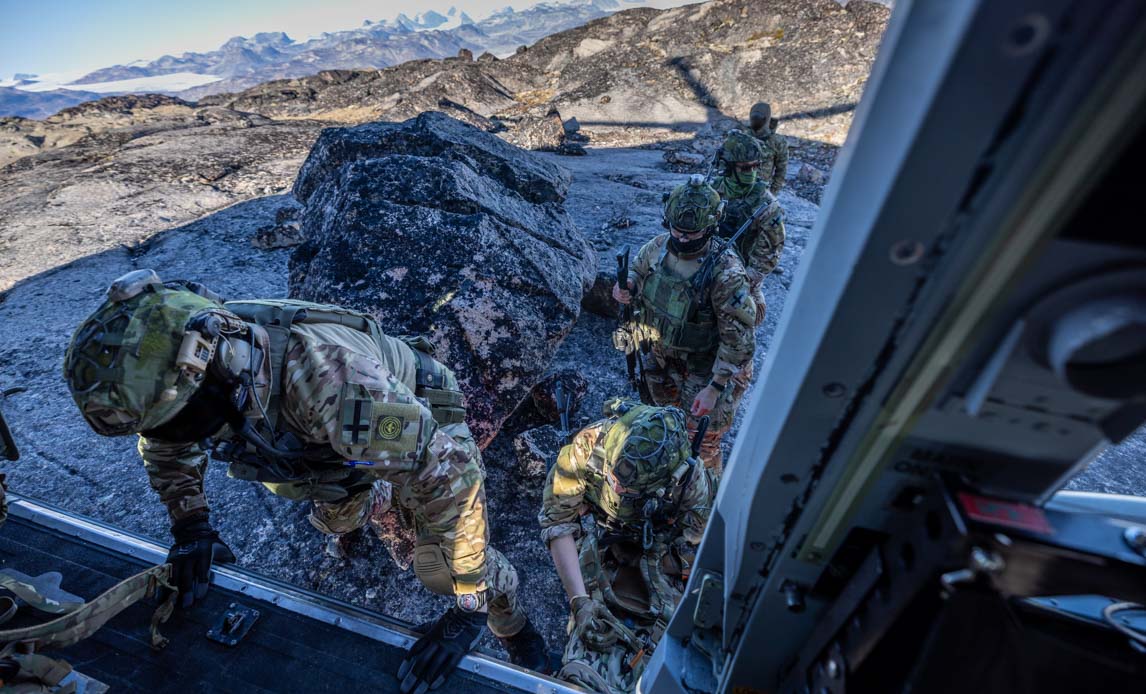
Photo: Casper Brock / Danish Defense
By the Danish Defense
At present, over 400 soldiers from 11 NATO countries are in Greenland, where they are taking part in the ‘Arctic Shield’ exercise. Here, they will train and share experiences with one another on how to operate and fight in an Arctic environment.
One of the many skills the soldiers are practising during the exercise is ‘Medical Evacuation’, abbreviated to MEDEVAC, which involves the emergency treatment and evacuation of wounded personnel. MEDEVAC involves moving the casualty from the scene of the incident to the nearest treatment facility, where the soldiers are responsible for initiating treatment of the casualty whilst they are being moved to the next location.
The landscape in Greenland makes rescue operations particularly challenging, as the helicopter and the soldiers must navigate the rugged terrain, which poses difficulties and may limit their ability to land and move around.
The exercise began with a group of Finnish special forces, accompanied by a Danish team, being sent out into the terrain on patrol near Narsarsuaq. Here, the Dane was to simulate having fallen into a ravine. The patrol group then abseiled down to the casualty and administered emergency first aid, whilst contact was made with the Danish rescue team on the EH101 Merlin helicopter, which flew out to meet the force with a Finnish medical team.
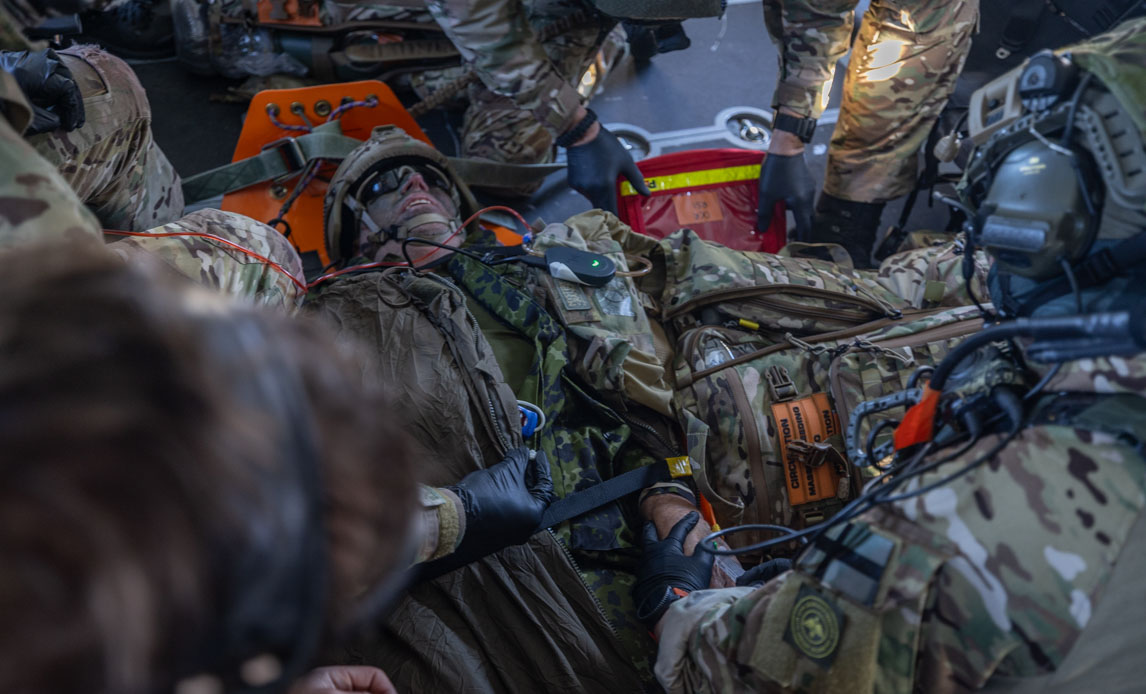
Finnish soldiers treating the Danish soldier on board the helicopter on their way to the nearest field hospital. Photo: Casper Brock / The Danish Defense
Together we are stronger
The casualty in the exercise was Danish Major Callesen from the Home Guard Command. For him, the exercise clearly demonstrated the strength of the soldiers’ cross-national cooperation.
“Even though we speak different languages, we share the same professional expertise. It was clear that their cooperation and professionalism ensured the rescue operation went exactly according to plan,” says Callesen of the exercise, which lasted eight hours.
When the helicopter reached the group, the wounded man was carried into the helicopters to the medical team, who took over his treatment. The patrol group continued out in the field. During treatment on board, some of the commands were given using sign language, so that everyone, regardless of their mother tongue, could understand what was being done – and what was going to happen. The soldiers administered injections to the casualty and attempted to stabilise his condition ahead of arrival at the field hospital.
It is rare for so many NATO countries to come together for an exercise such as Arctic Shield. With over 400 soldiers gathered in Greenland, this provides some truly unique opportunities to train as close to real-life conditions as possible.
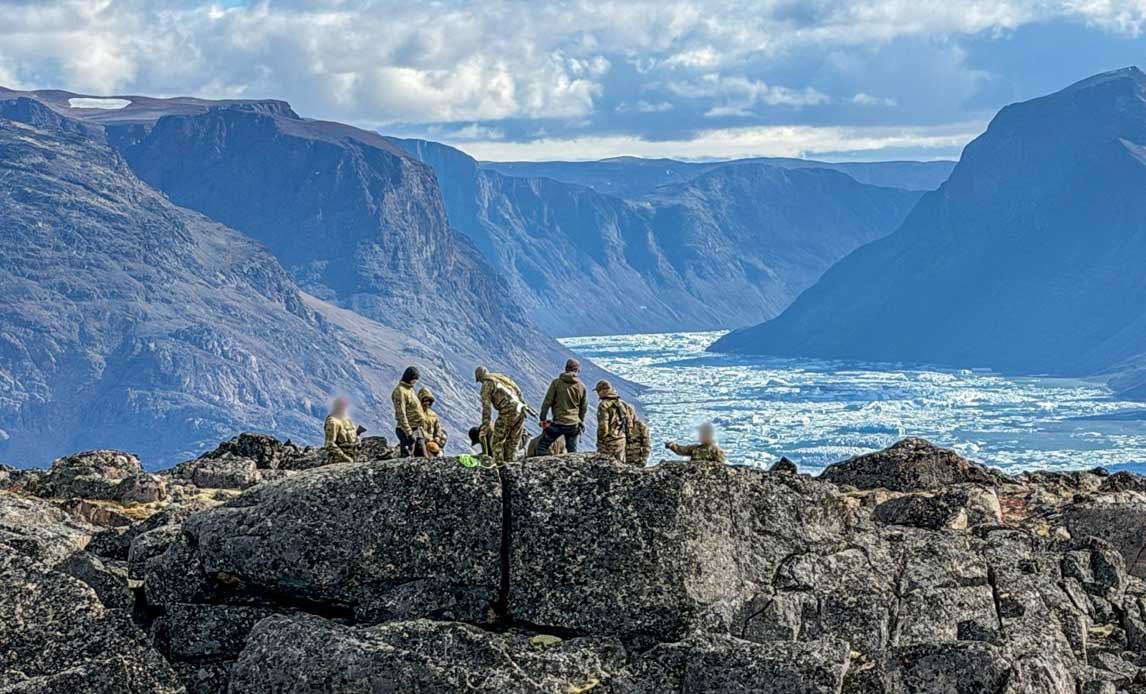
Finnish forces in Greenland. Photo: Danish Defense
Unique experiences
Following ongoing treatment in the helicopter, the soldiers landed at a field hospital, where the patient was handed over to the staff, who were also Finnish. Here, his pulse began to drop and signs of internal bleeding appeared. The staff identified that he had a haemorrhage in his spleen, which they therefore ‘surgically removed’.
A large plaster was applied to the patient’s abdomen, on which his ‘medical history’ had been written down, so that everyone knew what procedures had been carried out and what doses of medication the patient had received. From this point, the staff had to assess whether the casualty should be transferred to a civilian hospital (in this case, in Nuuk) or whether treatment could be provided on site, which also marked the end of the exercise.
“In a way, you could say that we’re bringing the whole chain together, because everyone is present with all their capabilities, and we have a special opportunity here to practise the process across national borders. That’s what makes exercises like these unique and strengthens us for the future,” says Callesen.
It is rare for soldiers to have the opportunity to train as close to real-life conditions as they do during this exercise. Scenarios they can use in the future.
“It is something quite special that the soldiers can train as close to real-life conditions as they do here. It provides a huge sense of reassurance to see that they can tackle the tasks demanded by the terrain – but also to see with your own eyes just how extensive the tasks we ask our soldiers to carry out actually are here,” says Callesen.
Increased presence in the Arctic
Arctic Shield is a Danish-led exercise in southern Greenland around Narsarsuaq and Qaqortoq, as well as at Kangerlussuaq. The exercise forms part of Arctic Endurance, which is being conducted in close coordination with the Greenlandic government, Naalakkersuisut.
Arctic Shield provides NATO countries with a unique opportunity to come together across national borders to share experience and become even stronger in operating and fighting in the Arctic.
By bringing together specialists from all countries to train together, it strengthens not only individual countries but also NATO as a whole.