Large Norwegian-led exercise strengthens security in the Arctic
Over the coming weeks, Danish forces, Danish air control units and several Royal Danish Navy vessels will participate in the exercise Cold Response, which this year supports NATO’s overarching activity Arctic Sentry. The exercise contributes to strengthening security in the Arctic and the North Atlantic.
March 9, 2026 - 11:54
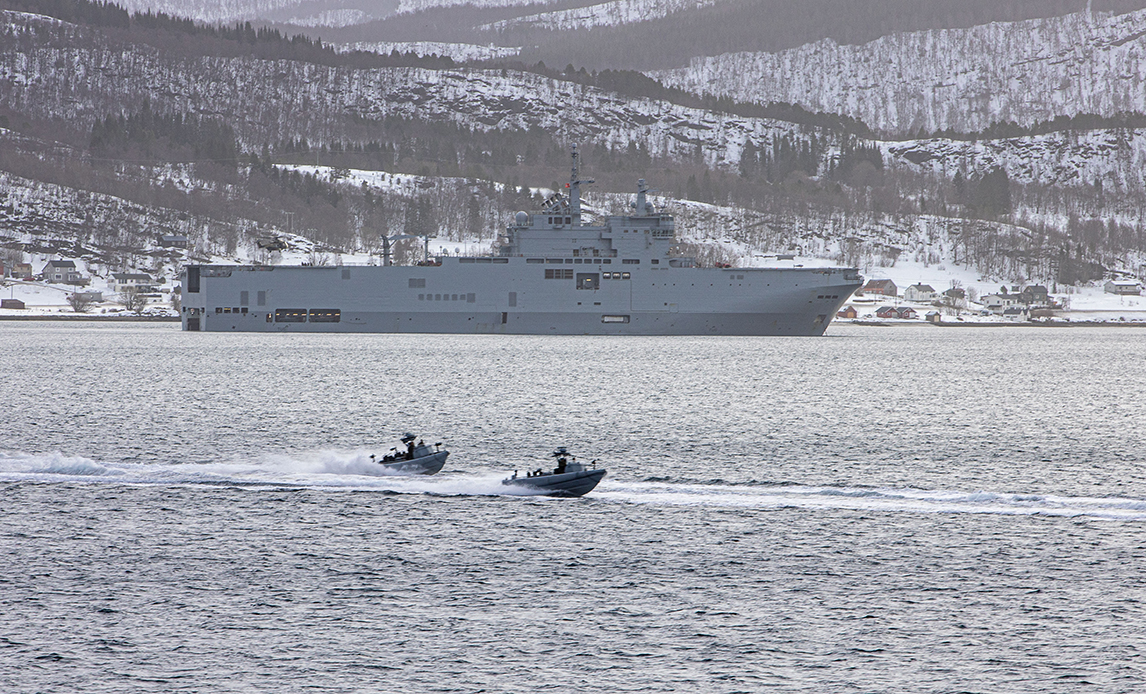
Exercise Cold Response this year supports NATO’s overarching activity Arctic Sentry. Photo: Danish Armed Forces
By the Danish Defence Command
More than 25,000 personnel, aircraft and ships from 14 NATO nations — including Danish naval vessels and their helicopters, as well as Danish personnel from Air Control Wing, Helicopter Wing and the Air Command — will take part in the large Norwegian-led exercise Cold Response over the coming weeks.
The exercise supports Arctic Sentry, NATO’s framework for coordinating military exercises in the Arctic and High North, with a focus on strengthening security in the region.
This activity also contributes to enhancing security around Greenland.
Operating in a different climate
One of the key objectives of Cold Response is to train participating forces, ships and crews to operate in a challenging climate.
The Arctic and the High North are characterised by rapidly changing weather conditions, extreme temperatures, strong winds and fluctuating visibility — just some of the conditions military personnel must be able to operate in.
At the same time, the geography and terrain differ significantly from more temperate regions. Familiarity with these operational conditions is therefore essential for both soldiers and military units.
Another key objective is to train NATO forces together. This strengthens NATO’s operational capability and enhances the Alliance’s readiness and collective defence in the Arctic region.
Danish experience
Denmark’s participation — including naval vessels and helicopters, personnel from Air Control Wing, Helicopter Wing and the Air Command, as well as technical specialists — provides valuable operational experience for the Danish Armed Forces in Arctic environments.
Through participation in Cold Response, Denmark also contributes to interoperability and coordination among NATO forces, supporting the Alliance’s overall objectives.
Personnel from Air Control Wing and the Air Command will interact closely with the broader exercise structure, contributing Danish operational experience and procedures while working side by side with Norwegian, Swedish and American colleagues.