Danish soldiers train to defend Latvia
Around 12,000 troops from Latvia and other NATO nations are currently taking part in the annual Namejs military exercise in Latvia. The exercise trains the defence of the country against hostile attack. Denmark is contributing troops from its deployed combat battalion.
September 10, 2026 - 12:00
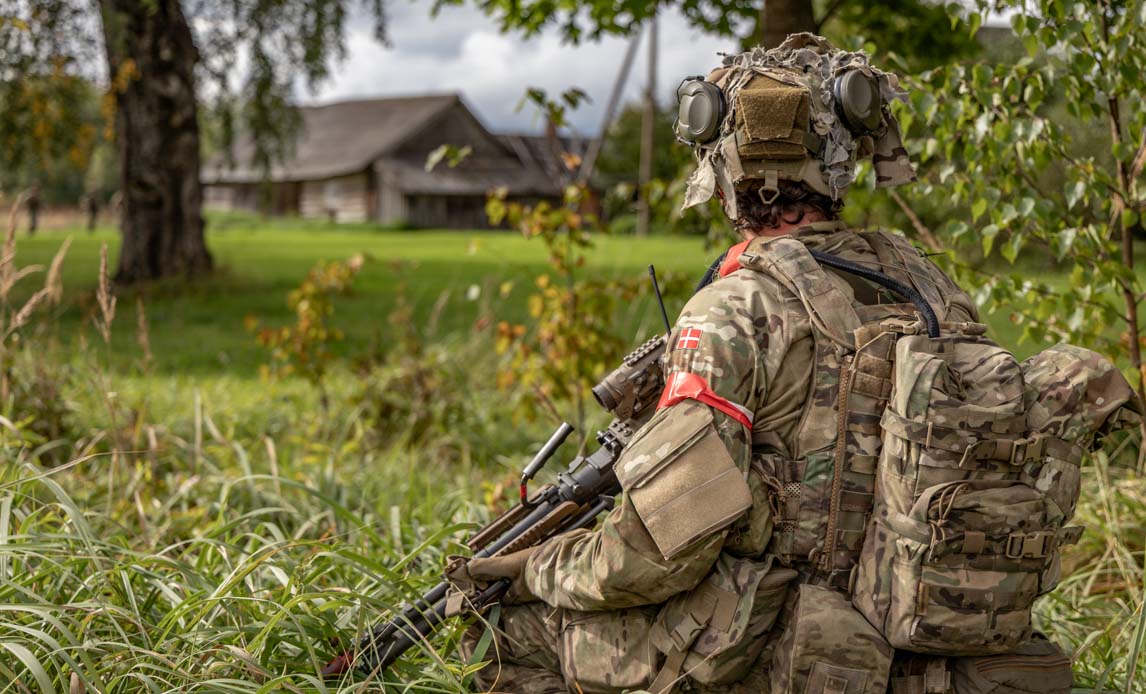
During Exercise Namejs, Danish troops have been training in civilian terrain in eastern Latvia. Photo: Theis Nielsen / Danish Armed Forces
By the Danish Defence Command
Rain has been falling over eastern Latvia throughout the night. The cold, damp air hangs heavily among the spruce and pine trees that stand close together around a group of Danish soldiers.
The forest floor is soft. A thick layer of moss, pine needles and dead leaves conceals the wetland areas, and in several places the ground gives way beneath their boots. But wet boots are the least of the soldiers’ problems.
A low, persistent hum spreads above the treetops. It could almost be mistaken for a swarm of bees – but that is far from the case. Somewhere above the forest, Latvian units have launched drones to search for the Danish soldiers.
The group moves quickly through the terrain. Small branches snap under their boots, sending short, sharp sounds through the trees.
“It’s just tick hell out here, lads,” one of the soldiers says as the group is forced to move through an area of tall grass.
The objective is the collection point further ahead, where the rest of the platoon is waiting to pick them up in the Piranhas.
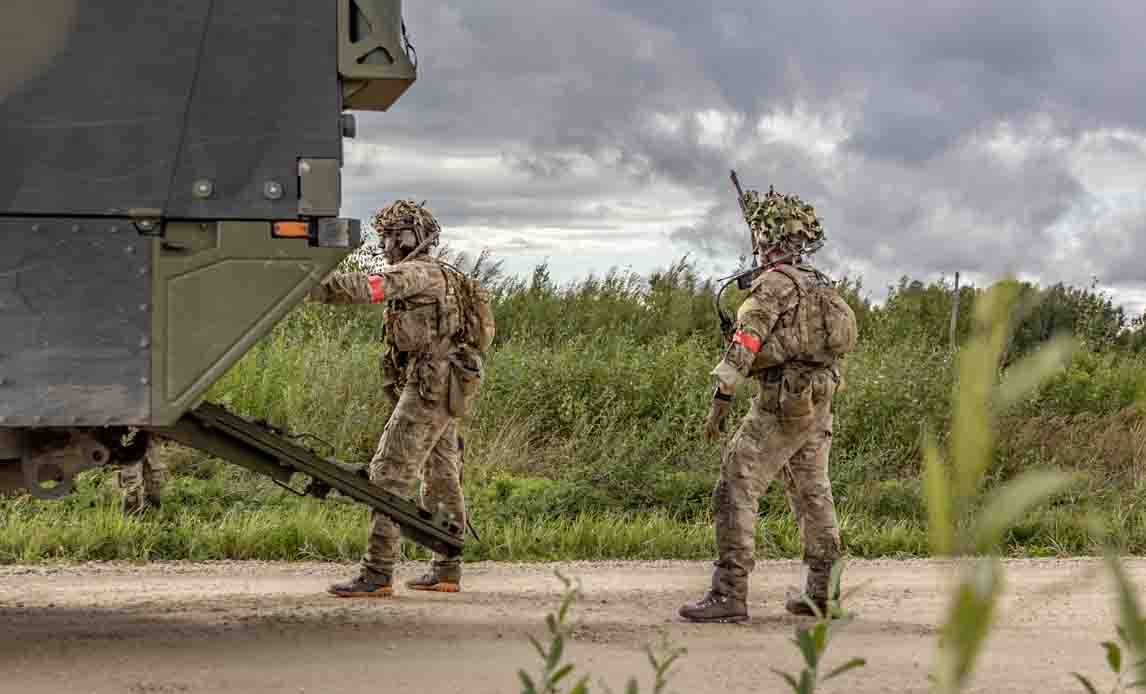
During the exercise, the Danish soldiers have acted as a hostile force against the Latvian units. Photo: Theis Nielsen / Danish Armed Forces
A country as an exercise area
Namejs 2026 is currently under way – a month-long exercise series taking place at several locations across Latvia. Around 12,000 troops from Latvia and a number of Allied nations are taking part in this year’s exercise.
The aim is to train the defence of Latvia while also testing cooperation between the Latvian Armed Forces, NATO Allies and a number of civilian authorities. Denmark has contributed around 200–300 troops to the part of the exercise taking place in north-eastern Latvia – just eight kilometres from the Russian border. The troops are drawn from the approximately 800-strong combat battalion currently deployed to Latvia.
The primary purpose of the exercise is to train the defence of Latvia, and the Danish soldiers have therefore taken on the role of a hostile force against the Latvian units.
At the same time, close cooperation with the Latvian forces has been a central focus. When troops from the two countries train side by side, they build trust and familiarity with each other’s procedures, while strengthening their ability to coordinate and respond quickly and effectively should the situation require it.
Exercises such as this therefore play an important role in ensuring that NATO forces can contribute effectively and in a coordinated manner to plans for the defence of Latvia in the event of an attack.
The exercise has provided valuable training for the Danish soldiers, particularly in the use of drones. The Latvian forces make active use of drones both to monitor and locate the enemy and to directly engage them on the battlefield.
“One of the overarching tasks for FLF 03 is interoperability with our Allies. By taking part in Exercise Namejs, we have contributed to strengthening and developing this. It has also added an extra dimension that the exercise has taken place so close to the border with Russia. I am very pleased with the commitment shown by our Danish soldiers. They have seized every opportunity for training, development and interoperability – this demonstrates the right approach to the task, and I am very pleased with that,” says the commander of the combat battalion, Lieutenant Colonel Karina Wøbbe.
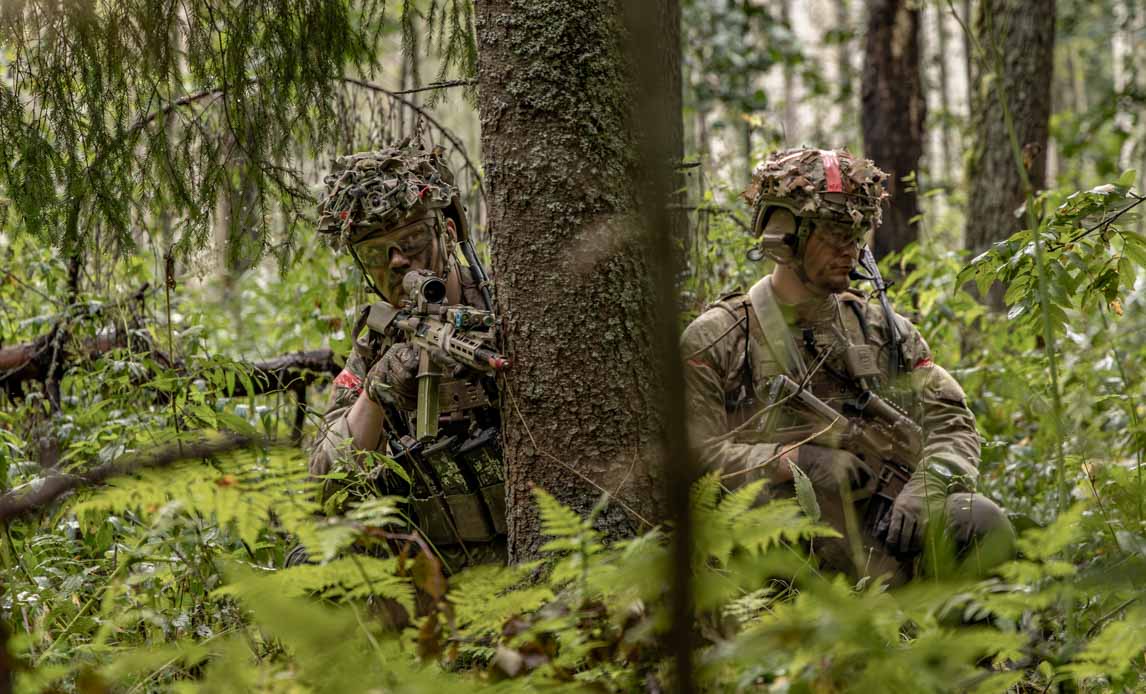
Exercise Namejs is taking place across Latvia. Photo: Theis Nielsen / Danish Armed Forces
For the Danish soldiers, the exercise has provided a unique opportunity to train closely with NATO Allies in a civilian environment and among the local Latvian population – something that differs significantly from the type of closed training areas in which soldiers normally train back home in Denmark.
This difference also presents a number of specific challenges for the soldiers’ movement and conduct. It has therefore required close cooperation between the Danish forces and the Latvian police, which has played an important role in informing the local population about the exercise. This includes situations where local residents suddenly encounter Danish armoured personnel carriers and patrol vehicles in villages or on the roads.
The Namejs exercise series will continue at several locations across Latvia until 8 October.
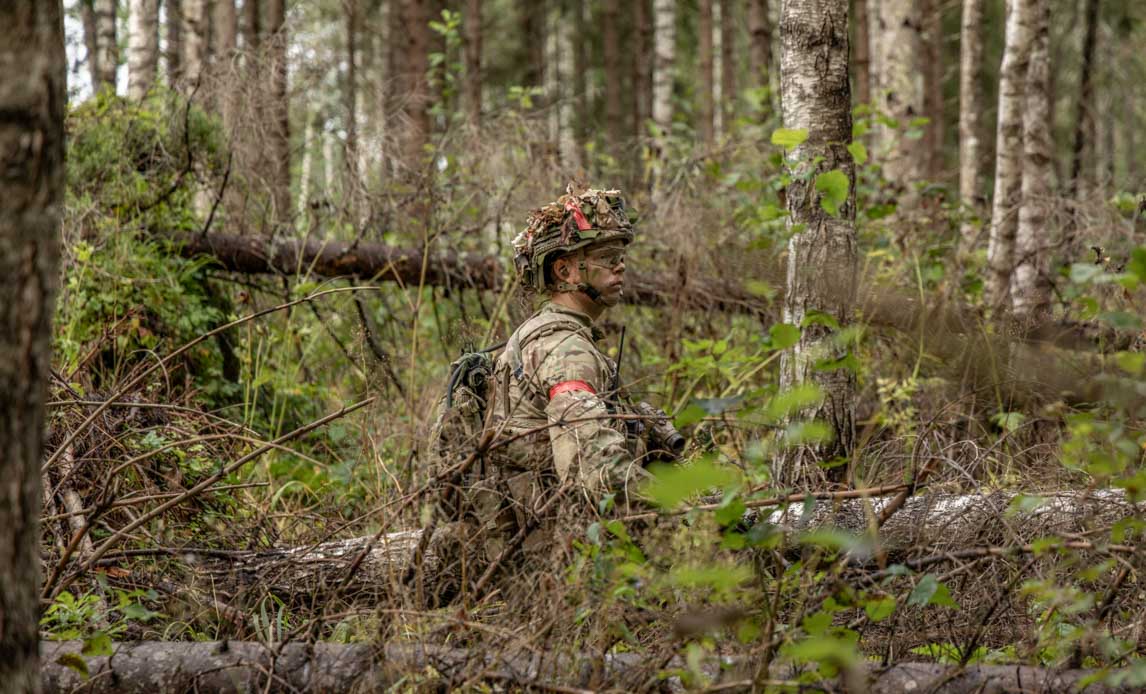
The forests of Latvia are challenging terrain to operate in, and exercises such as this also illustrate the challenges that any combat force operating in the area would face. Photo: Theis Nielsen / Danish Armed Forces