Danish Defence conducting training of collective defence of the Arctic in large Canadian-led exercise
The Danish Defence participates in the Canadian-led exercise Nanook Tuugaalik alongside units from France and the USA. The exercise is executed in both Canadian and Greenlandic waters provides unique training opportunities for the Danish Defence.
September 1, 2026 - 11:31
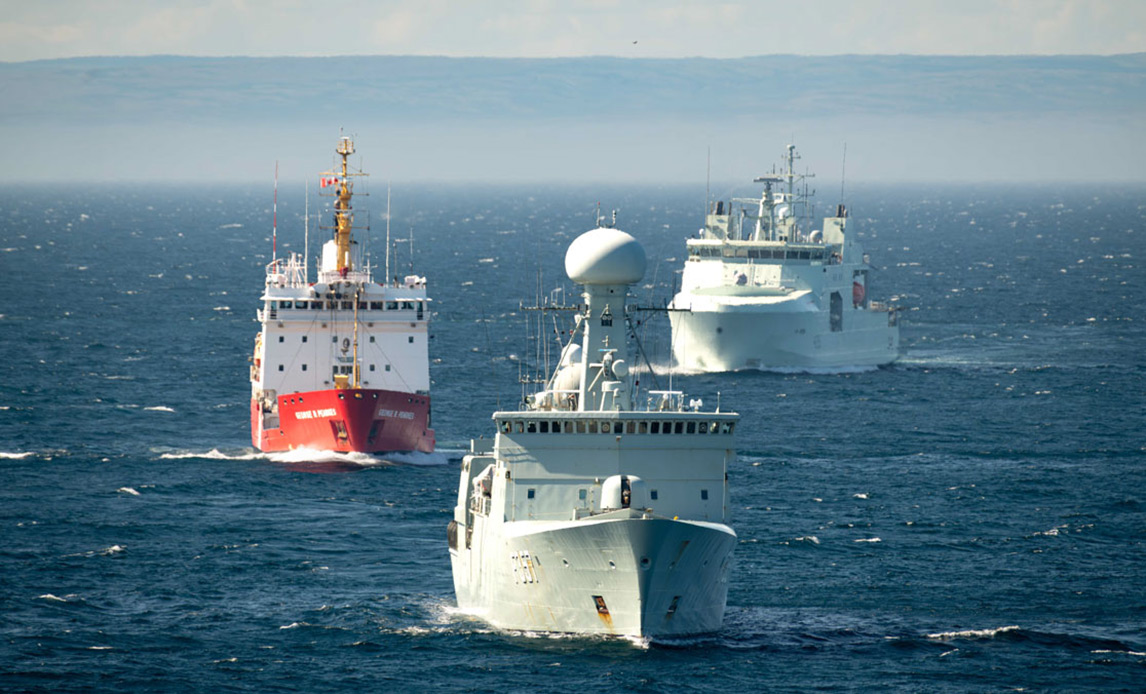
Photo: Canadian Armed Forces
By The Danish Defence
Read this article in Greenlandic - Allaaserisagaq kalaallisut atuaruk
The crew aboard the Danish inspection vessel Thetis participates in the large, annual exercise Nanook Tuugaalik, the Canadian Armed Forces’ largest maritime exercise in the Arctic.
Here, with Allies from Canada, France, and the USA, they are executing a range of activities which provides the crew with unique opportunities for training, build-up of combat power, and increased expertise.
The exercise bolsters the international cooperation which is vital to an effective and Allied readiness in the Arctic. For in a region with one of the toughest environments on the planet and an area twice the size of Europe, a combined presence and sharing of resources, knowledge, and experiences are alpha and omega.
Exercises such as Nanook Tuugaalik are therefore important, both for the individual country, but also for the collective deterrence of NATO and its ability to operate in the Arctic.
”The exercise provides ample opportunities for training our ability to operate together under the unique Arctic conditions. When Danish and international units train side by side in and around Greenland, we strengthen our operational capabilities, our readiness, and our combined understanding of the challenges that come with operating in the Arctic. That is particularly important in times like these, because Arctic security is a collective responsibility,” says Major General Søren Andersen, Commander of Joint Arctic Command in Nuuk.
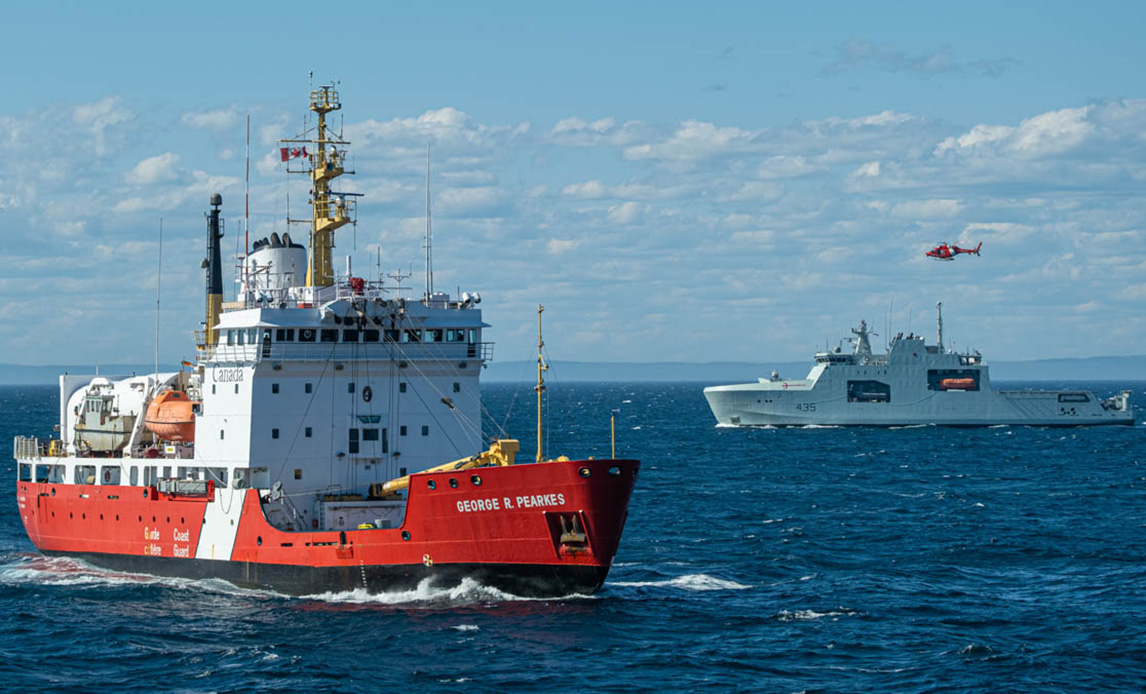
Photo: Danish Armed Forces
Increased Allied Presence in the Arctic
The exercise takes place in a time of elevated focus on NATOs presence and ability to operate in the Arctic as well as the region’s growing importance concerning the collective defence of the Alliance, following increasing Great Power Competition and the effects of climate change.
This resulted in the creation of the NATO-activity Arctic Sentry earlier in the year, which incorporates Allies’ contributions within the frame of NATO under Joint Force Command Norfolk.
The elevated focus is also particularly felt in Canada, where 40% of the landmass and a full 70% of its coastline is located in the Arctic region. Therefore, the contributions made by allied countries such as Denmark to the collective task in the Arctic is appreciated:
“For our ships, crews, and allies, TUUGAALIK is about spending time where it matters most: on the water, in the Arctic, exercising together to build familiarity with the region and maintaining awareness at sea. Every patrol deepens our understanding of the operating environment, our capabilities, and strengthens the relationships we have with communities and partners across the North,” says Commander Brian Henwood, Commanding Officer of HMCS Robert Hampton Gray and the Task Force Commander.
The initial 14 days of Nanook Tuugaalik have been executed in Canadian waters, after which the final part of the exercise takes place in Greenlandic Waters, where Joint Arctic Command is responsible for the exercise.
The exercise concludes at the Port of Nuuk and a subsequent “open ship”-event
Facts: Nanook Tuugaalik
- Operation Nanook is the Canadian Armed Forces overarching signature operation in the Arctic, which consists of a range of activities focused on cooperation, partnerships, and readiness across branches, agencies, and countries.
- Nanook Tuugaalik is the maritime-led operation, executed in order to perform monitoring and sovereignty enforcement in cooperation with allies and partnering nations.
- Nanook Tuugaalik is this year executed with participation by naval and coastguard units from Canada, Denmark, France, and the USA.
- The part of the exercise taking place in Greenlandic waters includes training scenarios of rescue operations and environmental readiness, fishing inspections, protection of critical infrastructure, as well as detection and denial of entry.
- The exercise is launched with departure from Halifax and two weeks of exercise in Canadian waters, after which the remainder of the exercise is executed in Greenlandic waters and concludes with a port call in Nuuk.