Rescue Exercise off Reykjavik Demonstrates the Strength of International Cooperation
Once again, Denmark has taken part in the annual international exercise Dynamic Mercy together with a number of other NATO countries. Through realistic scenarios, they demonstrated that, in close cooperation, they are capable of carrying out complex rescue operations at sea.
May 21, 2026 - 10:00
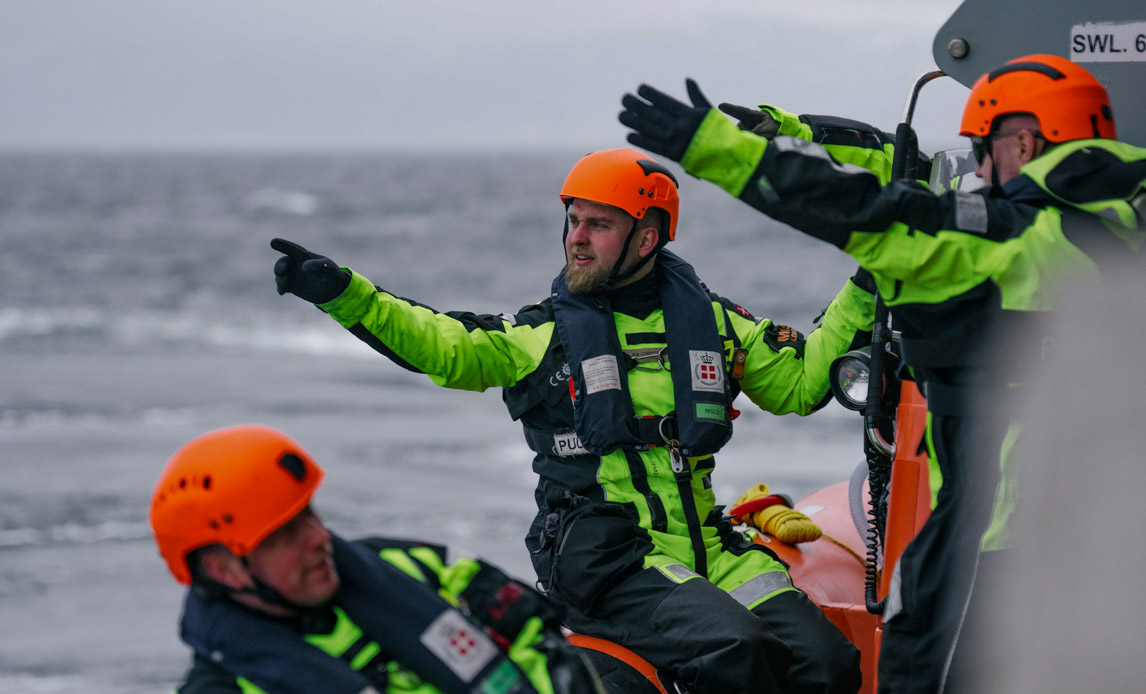
Photo: Nick / Danish Defence
By Danish Defence
An alarming report arrives at the rescue coordination centre in Iceland. Two ships have collided off Reykjavik. There is extensive damage, many injured people and people in the cold sea. Within minutes, ships, aircraft and rescue helicopters are dispatched to the area west of Iceland. The rescue operation is underway.
This was one of the scenarios included in NATO’s maritime and aeronautical rescue exercise Dynamic Mercy Atlantic. The exercise, which took place during April and May, brought together a number of NATO countries in close cooperation in the management of major maritime accidents.
“When the alarm is raised in the Arctic, time, coordination and trust are crucial. That is why exercises such as this are absolutely essential,” says Michael Senger, Commander Senior Grade at the Joint Arctic Command.
Chaotic Scenario in Severe Weather
The exercise scenarios were anything but simple. On one of the days, two ships had collided in rough seas off Reykjavik. One vessel drifted seven nautical miles away from the collision site and sank without managing to send a “mayday” call. On the surface of the sea was a life raft and several dummies representing distressed crew members – all equipped with life jackets and markings describing their injuries.
The other vessel, portrayed by the Icelandic Coast Guard vessel Baldur, had sustained extensive damage following the collision. Water was entering through a large hole in the bow, and there were both injured passengers on board and people, represented by dummies, who had fallen overboard.
The exercise involved an extensive emergency response. Iceland participated with two coast guard vessels, two rescue helicopters and a surveillance aircraft from the Icelandic Coast Guard. Denmark contributed the inspection vessel Hvidbjørnen and a Challenger aircraft from Air Group West.
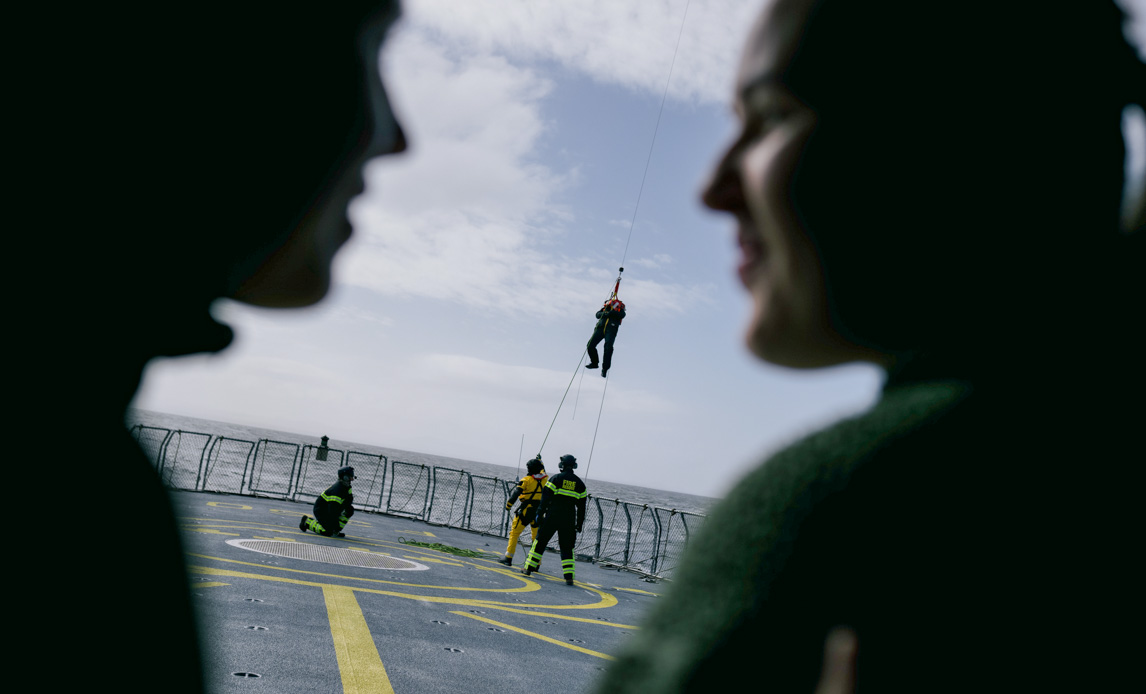
Photo: Nick / Danish Defence
Experience and training across national borders
One of the exercise’s most important purposes is to train cooperation between the international rescue coordination centres, the so-called Joint Rescue Coordination Centres, when a serious incident develops across areas of responsibility.
Throughout the day, the rescue coordination centres practised the deployment and coordination of ships, aircraft and rescue helicopters. Assistance to the distressed vessel was initiated, along with the search for and recovery of people in the water.
The exercises are organised so that the units not only train their own ability to operate under demanding conditions. They also trained cooperation, as they had to hand over the rescue operation from one rescue coordination centre to another during the exercise. This took place specifically when the rescue coordination centre in Greenland assumed coordination of the operation from the Icelandic authorities.
“Accidents do not respect geographical borders, and therefore our cooperation must function seamlessly from the first report to the last person rescued. The better we know each other’s procedures, capabilities and decision-making processes, the stronger we stand when it truly matters,” says Michael Senger.
The Danish contribution took responsibility
When exercises like this take place at sea, where responsibility is shared, coordination and cooperation are essential. During the exercise, command was transferred to the Danish inspection vessel Hvidbjørnen, which at the conclusion of the exercise was responsible for the operational control of the units at sea. Likewise, the Danish aircraft was responsible for coordinating the deployed aircraft.
After seven hours of intensive exercise, the participating units succeeded in locating and recovering all “distressed persons” – either by ship or helicopter.