Nyheder
Forlig
Døgnrapport
Arrangementer
Følg Forsvaret
Forsvarets arealer
Publikationer
How do you prioritize your time in the best possible way? That is an exercise former patrol leader and current chairman of the Sirius Association, Rasmus Gregersen, went through again and again during his two years in Northeast Greenland. Today, that lesson is a central part of his life—whether he is sailing with his family, building a deck, or simply folding laundry.
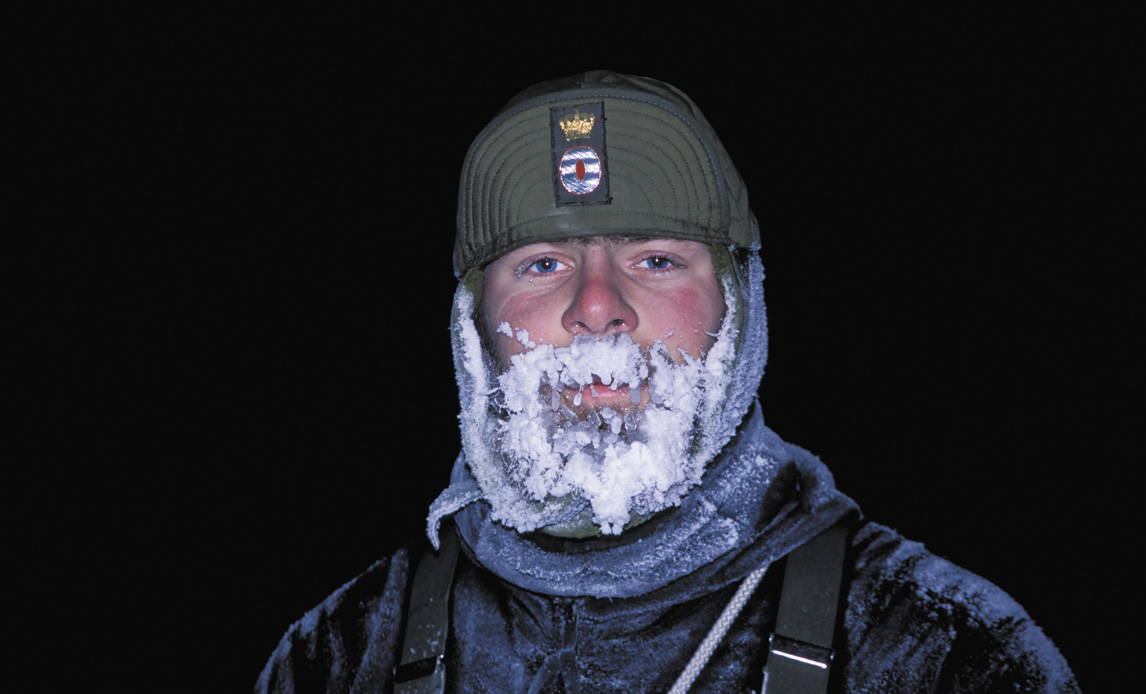
For Rasmus Gregersen, the two years from 2001 to 2003 were life-changing. Photo: Danish Defence
By Danish Defence
It is late summer when we, on the occasion of the 75th anniversary of the Sirius Patrol, first speak with Rasmus Gregersen. At the time, the former patrol leader and since 12 years chairman of the Sirius Association is in the middle of his vacation, which he is spending sailing in the South Funen Archipelago with his wife and their two children.
Sailing is a hobby he had gradually taken up before departing for Greenland nearly 25 years ago. When he returned home, his experiences at sea only deepened that interest.
“Dog-sled journeys and sailing certainly have this in common: there is some fundamental knowledge you need to have under control. There are also clear similarities in being in situations where you are not in control and still having to manage. In fact, many ‘fuppers’—slang for patrol leaders—return home and develop an interest in sailing,” says Rasmus Gregersen.
Having control over both your equipment and yourself is fundamental to being selected for the Sirius Patrol. These are qualities that are only sharpened by the challenges one faces as a patrol leader.
For Rasmus Gregersen, the two years from 2001 to 2003 were life-changing.
“It was absolutely fantastic. It was extremely tough and intensely challenging. And I came through it without scars to body or soul, and with additional friendships in my pack. Of course, I’ve had incredible nature experiences that very, very few people are ever granted. But what you really bring home is having survived situations that would kill you if you didn’t think things through. That builds a person. Sirius gave me the confidence that I can handle anything I take on,” he says.
In addition to confidence in his own abilities, he brought home one crucial question—one he asks first, no matter what he is about to do: What is most important right now?
“If you fall through the ice, the most important thing is first to get your skis off so you can get back up through the hole. Depending on the weather and temperature, you then face some critical decisions about sequence. If it’s bitterly cold and your clothes are wet from going through the ice, the most important thing is not to sit down and have a cup of cocoa and talk the situation through. You can do that once you’re dry or sheltered,” says Rasmus Gregersen.
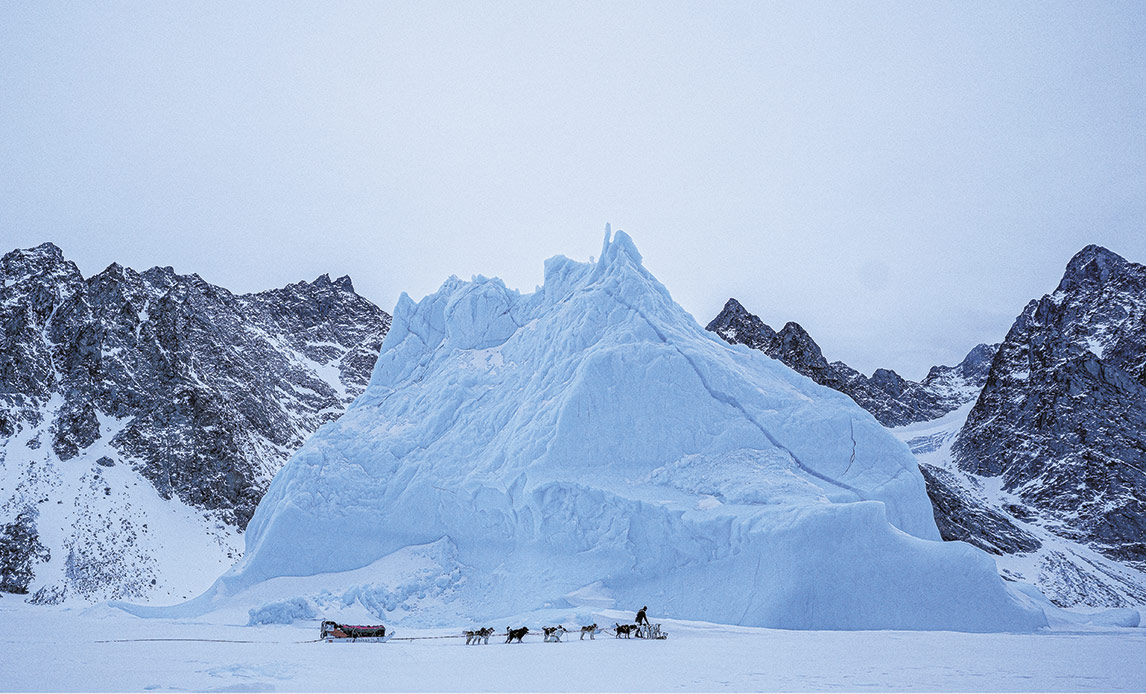
Photo: Danish Defence
According to Rasmus Gregersen, always doing the most important thing first can be transferred to any situation—both in professional life and at home, whether you are folding laundry or building a deck.
“We can all fill our lives with distractions or at least with things we think we ought to do. Once the list gets long enough, it’s easy to become confused. Then you have to strip it down to the core and ask yourself: What is the very first thing I need to do?” he says, continuing:
“When you are faced with too many choices that are hard to grasp, it can lead to stress or at least to inaction and outright passivity. I force myself to prioritize how I use my time. That approach is something I used in Greenland, and it’s something I use at home.”
Self-discipline was an important part of his life even before, at the age of 26, he began his two-year service as a patrol leader. As a newspaper delivery boy in his youth, he learned that the occasional discomfort of hard work and bad weather was rewarded by a paycheck at the end of the month. Experience from two deployments as a soldier in Bosnia further strengthened his self-discipline, and in 2001 he arrived in Northeast Greenland, where he learned to balance confidence with humility.
That balance is part of the selection process. If it has not already been perfected, it must be learned very quickly in the new life as a patrol leader in the Sirius Patrol. You arrive in Greenland as the junior partner, apprenticed to the senior partner, who has already completed one year as a patrol leader.
“You have a partner who is trying to teach you how to survive in a place where you could die. You have to be able to function within a hierarchy and accept that you are not in charge of everything. If you can’t do that, then you can’t be in Sirius,” says Rasmus Gregersen.
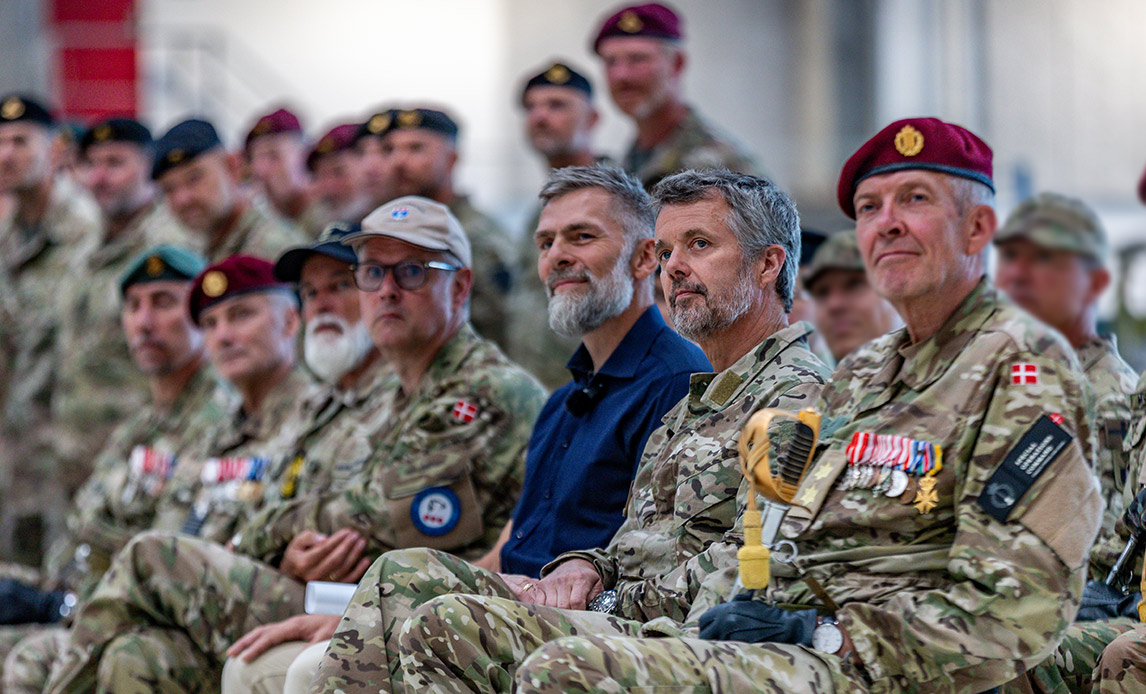
Rasmus Gregersen with His Majesty the King celebrating the 75th anniversary of the Sirius Patrol. Photo: Danish Defence
As a patrol leader, you must dedicate yourself 100 percent to the partnership, the sled, and the dogs. You must accept that relationships in Denmark are difficult to maintain. Rasmus Gregersen knows of individuals who passed the selection process and earned the right to wear the Sirius insignia, yet still ended up quitting—or even being sent home.
“If you spend your time and energy trying to be everywhere else, you won’t succeed in Sirius. You won’t succeed in the mission, and you certainly won’t succeed with the things that occupy you back home, because you are simply too far away to manage them. If you don’t fully step into the relationships with your partner when you are out on patrol, and with the other patrol leaders when you are in Daneborg (Sirius HQ), Northeast Greenland can become a very lonely place. Sirius can be an amazing place, and it was for me. But if you isolate yourself, it becomes very lonely. I know of people who spent hundreds of thousands of kroner on expensive satellite phone connections home to talk with relatives or a partner they weren’t supposed to have,” he says.
What characterizes a good patrol leader, according to Rasmus Gregersen, is the ability to carry out the mission despite adversity. Even though Greenland is a beautiful place, the sun does not shine every day.
“You also have to get up on the days when everything is gray, when it’s sleeting, the wind is blowing 20 meters per second, all your clothes are wet, your partner is irritating, and the dogs don’t do anything you ask them to do. And there is always something that needs maintenance or repair. If your weapon has rusted solid when you encounter a polar bear, then you’re done,” he states.
No matter how positively charged a word like conscientiousness may be, there is a downside. That is something Rasmus Gregersen has experienced during his time as chairman of the Sirius Association.
“You don’t get into Sirius if you give up on tasks. You have the will to take responsibility—ultimately for other people’s lives. You also have to be more than ordinarily practically skilled to solve the many different tasks you encounter in an environment that will kill you. The good—and sometimes problematic—thing is that you bring those traits home with you into a more or less ordinary working life. Many end up in the strangest jobs where they could easily put in many hours. When you are a conscientious type, you put in the hours you yourself believe are necessary to succeed and do the job well. Some discover that suddenly 20 years have passed since Sirius, and they have forgotten to nurture their friendships. That’s where the Sirius Association shows its value,” he says.
The Sirius Association has around 250 members. Some have only just returned from Greenland, while others are retirees. According to Rasmus Gregersen, what matters most is having like-minded people with whom you can share your story—people who can be hard to find in everyday life.
“When you come home from an experience like that, there really aren’t many people here who understand what you’ve been through. That can mean you’re left somewhat alone with your emotions. So having an association where you can meet and tell stories without having to go through the entire backstory is more important than many people realize.”
He describes the association as meeting an old, good friend. Even if you haven’t seen each other for years, the relationship is unchanged—you pick up where you left off.
“If you’ve ‘pickled’ a person for 20 years, they might well take it personally. That’s not how it is in the Sirius Association. In a time when it has become more acceptable to talk about loneliness, it is actually quite important to have a place you can go without feeling that you owe anything, and where you are welcomed as if you had never been away,” says Rasmus Gregersen.
Rasmus Gregersen’s original motivation for joining the association—first as a board member and later as chairman—was to help create a meaningful community for former Sirius personnel. In his view, that goal has been achieved.
“Of course I put in many hours, but it’s also great fun. It’s a group of good people. So it has never been a difficult decision. And when I one day step down, I know that someone else will come along who is willing to put just as much energy into it.”
Technical school, including:
Oil burner course
Welding course
Osmosis course
Electronics course